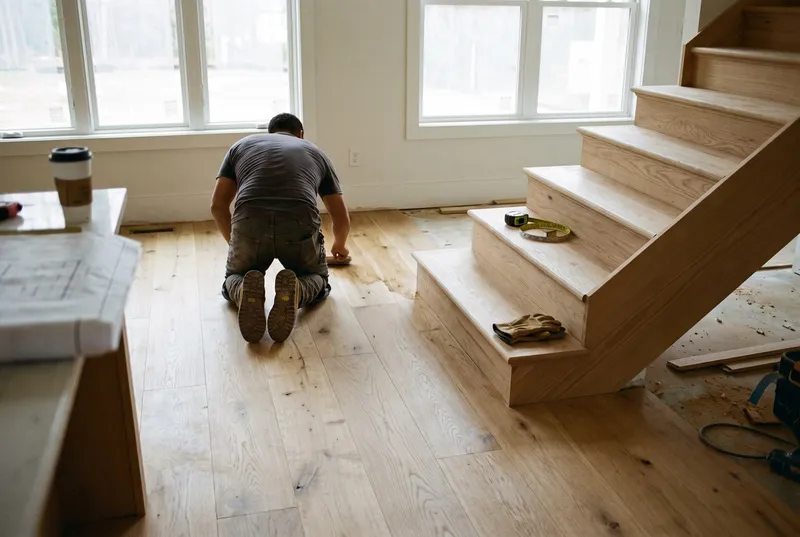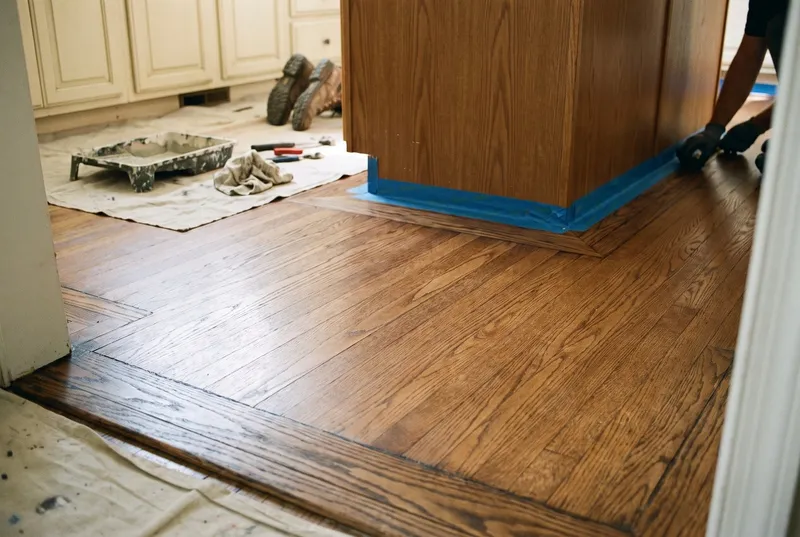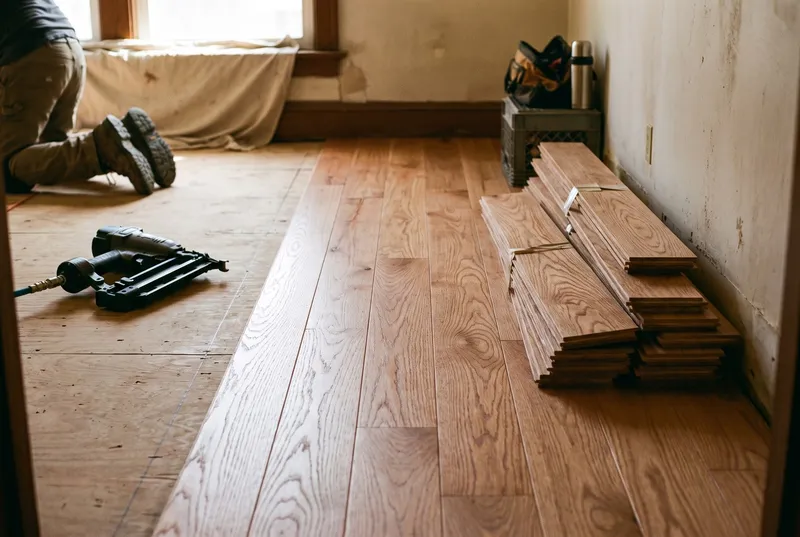
Solid hardwood floor installation
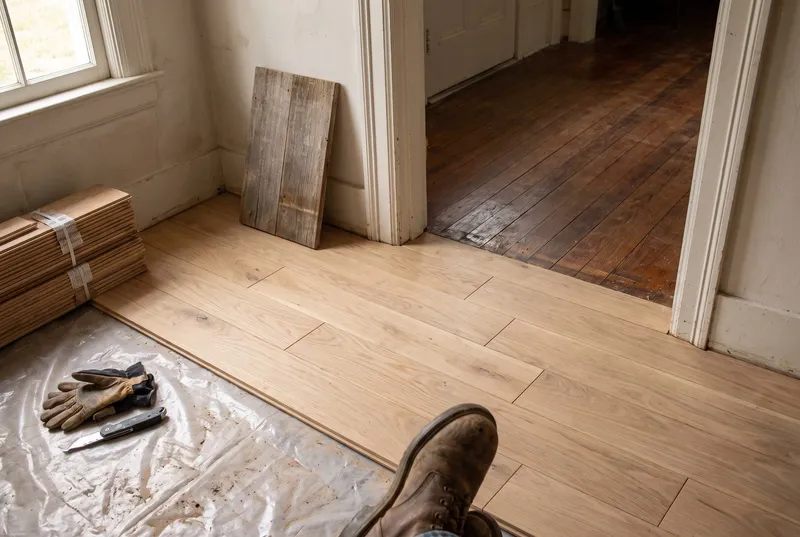
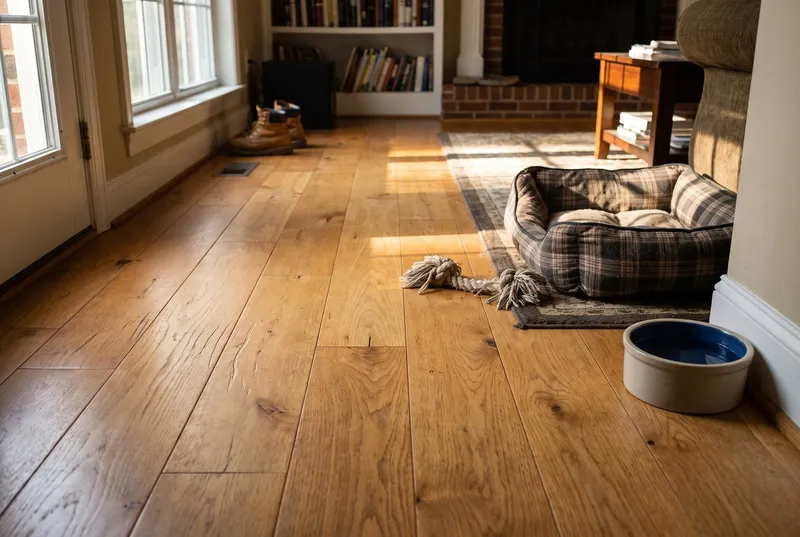
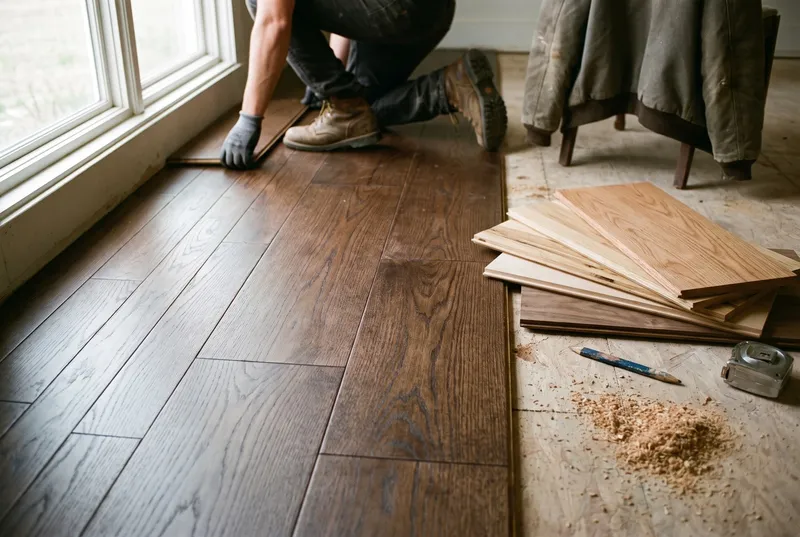
Three-quarter inch nail-down in red or white oak, hickory, maple or walnut, usually in 2 1/4 to 5 inch widths. The boards sit in your house to acclimate before they go down, because a board that is nailed too wet or too dry will gap or cup by the next summer. We set the layout so the last row is not a sliver.
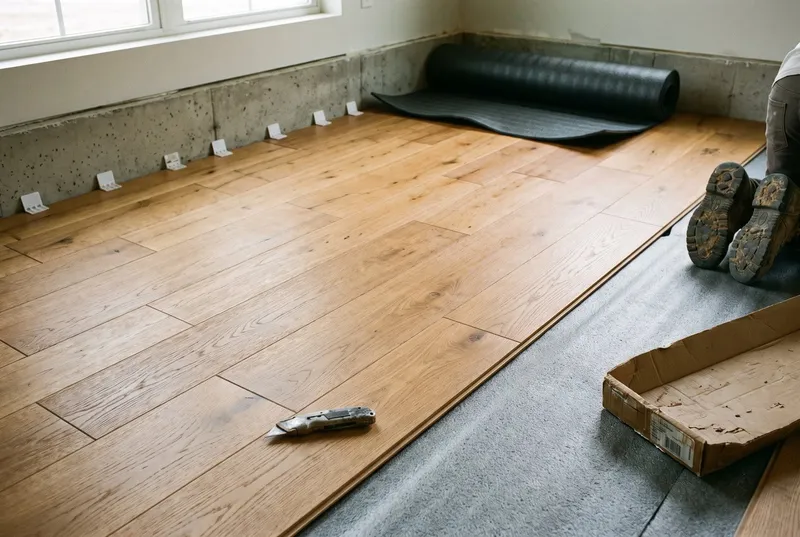
Engineered hardwood installation
Glue-down or floating planks with a plywood core and a 2 to 6 mm wear layer of real wood. It is the right pick over a concrete slab, in a basement, or anywhere moisture moves, because the cross-layered core holds its shape better than solid board. The wear layer sets how many times it can be refinished, so we measure it first.
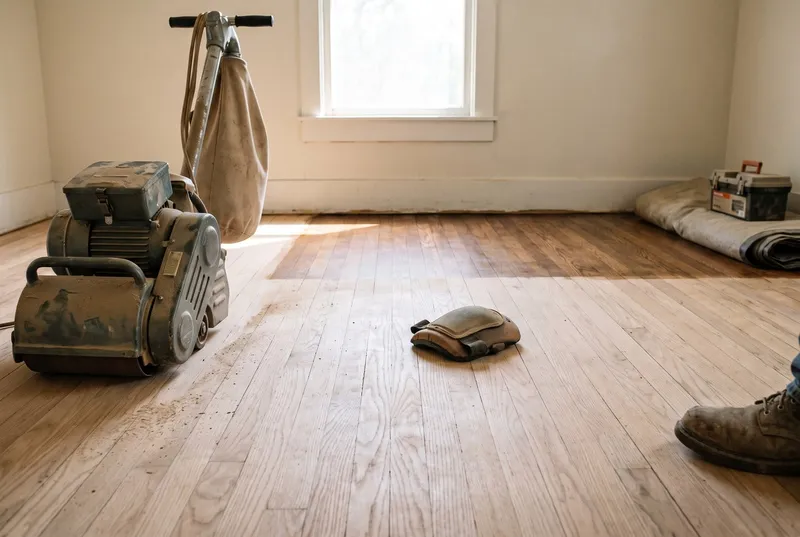
Hardwood floor refinishing
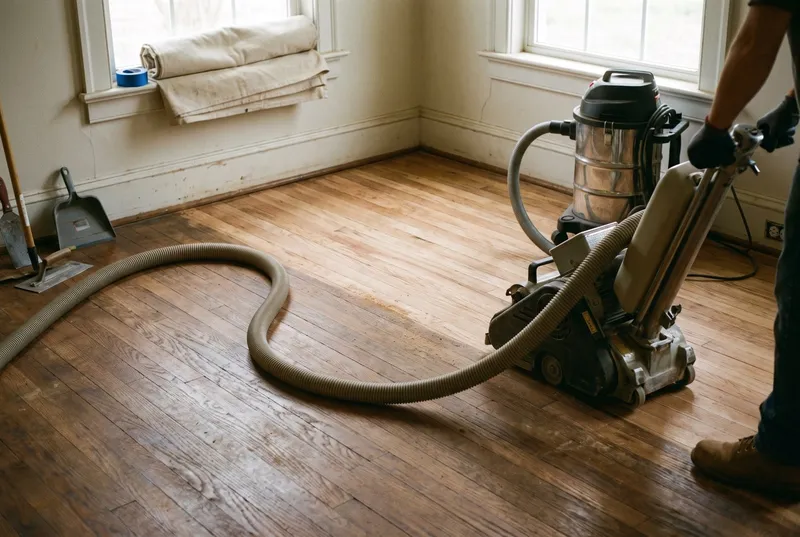
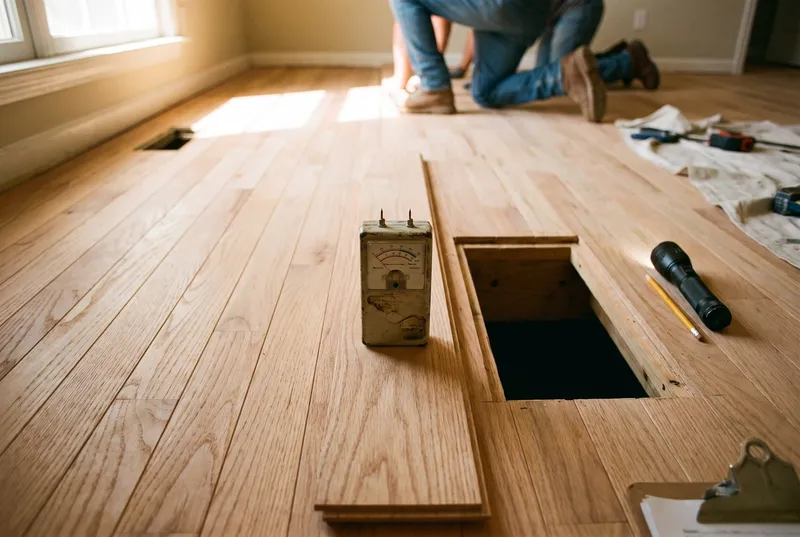
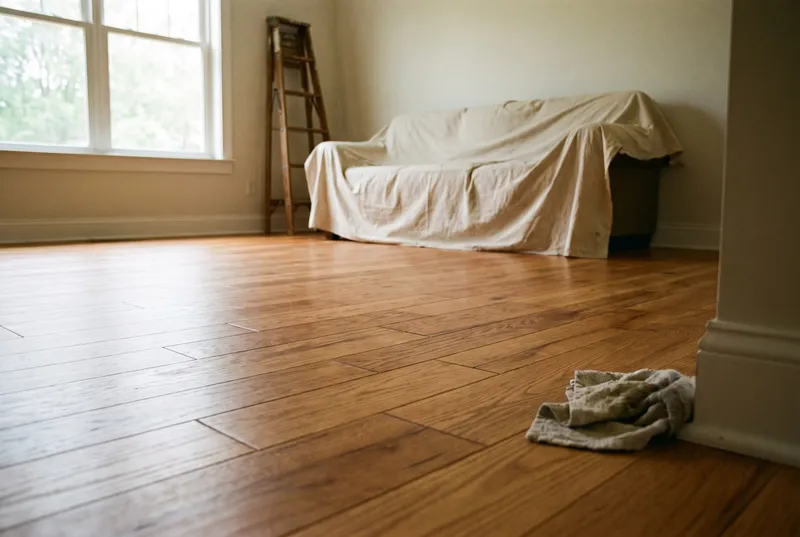
Sand to bare wood, repair, stain if you want a new colour, and seal with three coats. A refinish costs a fraction of replacement and takes days, not weeks. We would rather bring a sound floor back than tear it out, so we check the thickness at a floor vent before we quote anything.
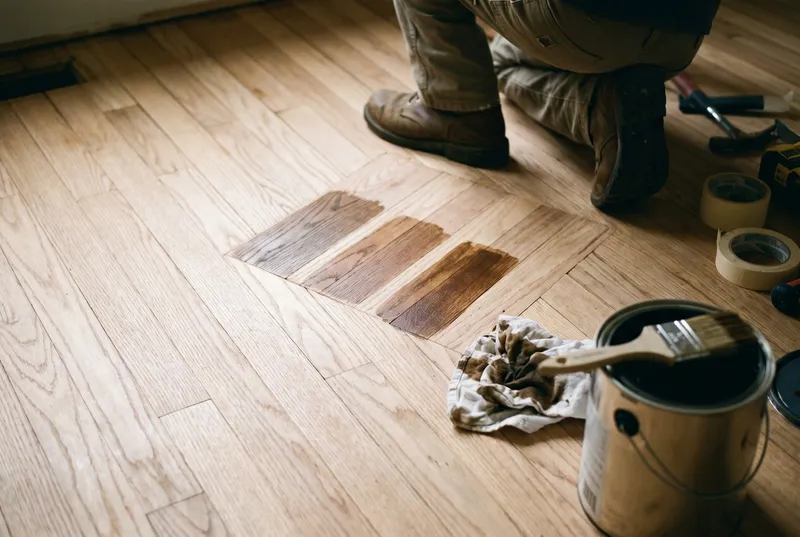
Hardwood floor sanding and staining
Three passes with graded paper, then a stain sample on your own floor before anything is committed. Grey-browns and natural tones are the most asked for, and oak takes them differently than maple, so the sample matters more than the colour chip.
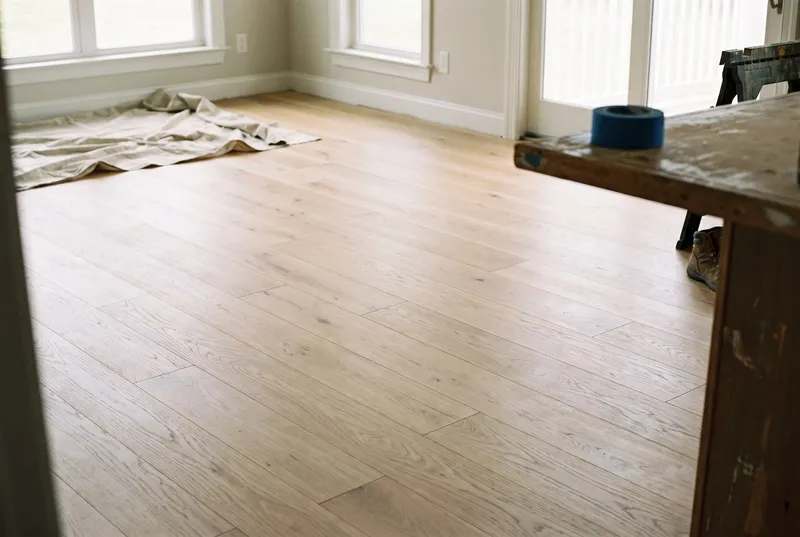
White oak flooring
Tight grain, stable, and it takes both clear and tinted finishes well. Rift and quartersawn cuts give a straighter, calmer look, and wide planks show the grain off. White oak is the species most Union County homeowners ask for by name.
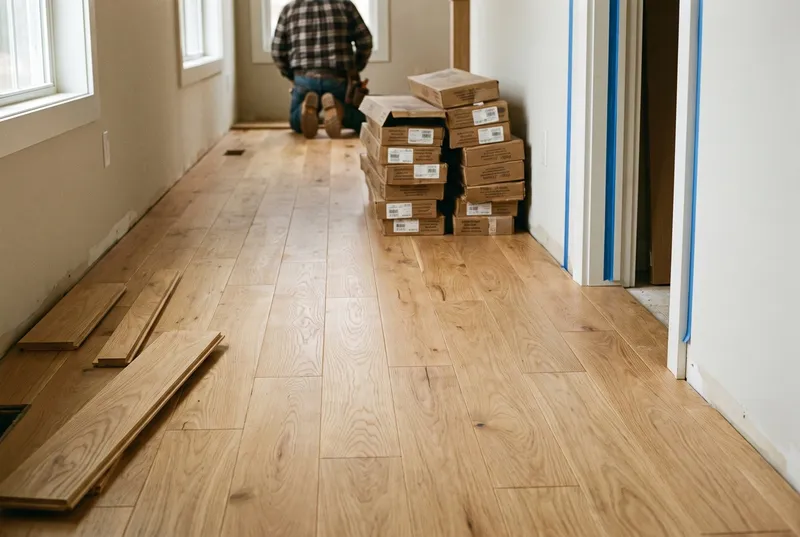
Prefinished hardwood for new-construction homes
Factory-finished boards go down fast and need no sanding dust inside a new house. We handle the transitions, the stair nosing and the final walk-through. The trade-off is slightly beveled edges, which some homeowners like and some do not.
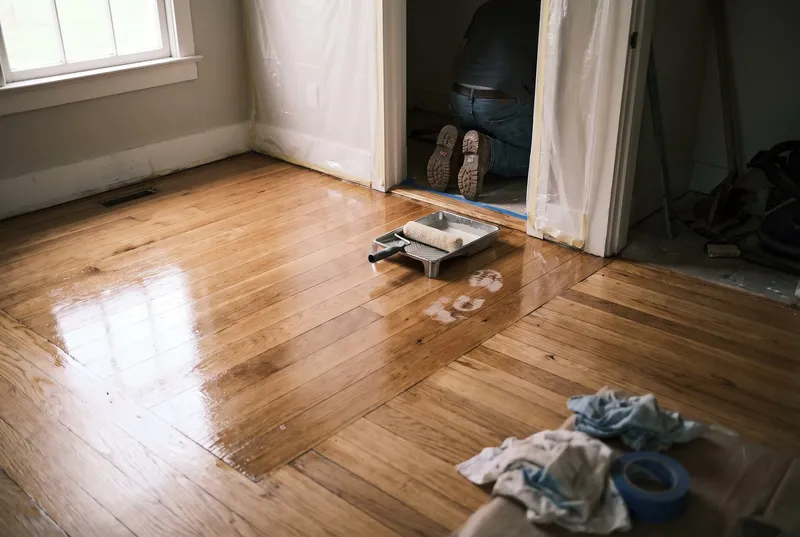
Unfinished and site-finished hardwood
Boards are finished in the room, so edges seal flat and the colour is yours to pick. It takes longer than prefinished flooring and gives a smoother surface. This is the route for custom stains and for matching an existing floor.
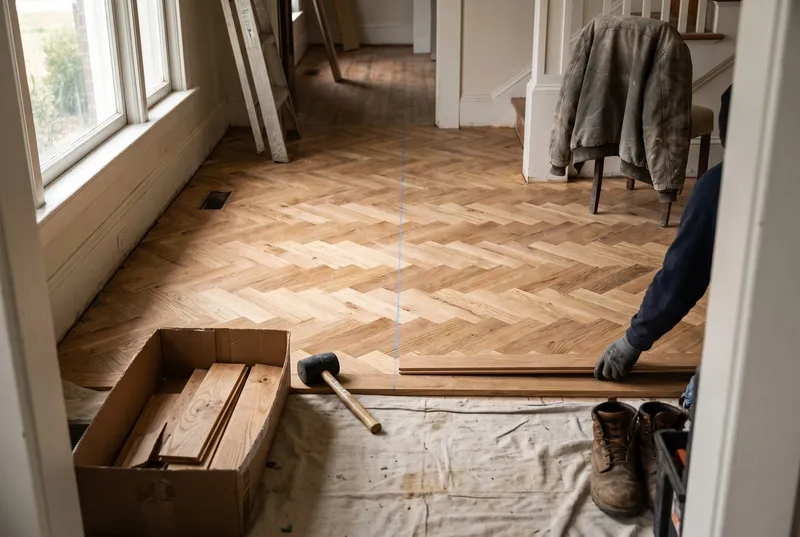
Herringbone, chevron and wide-plank layouts
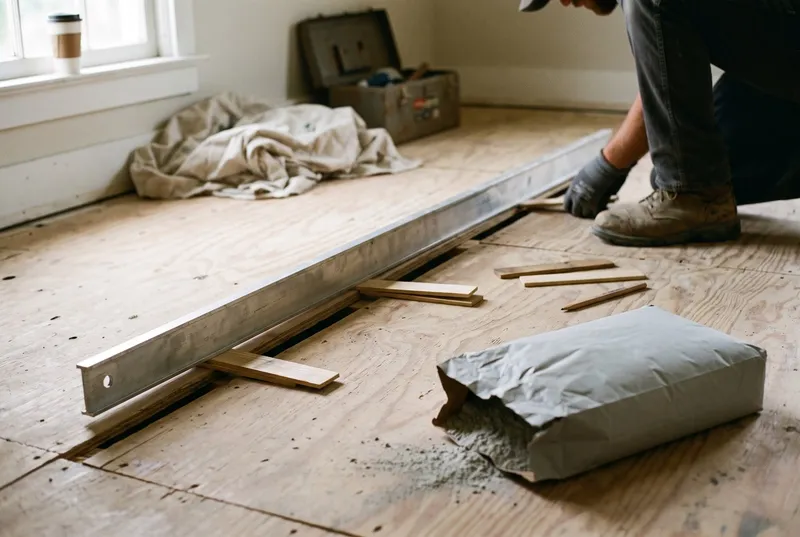
Patterned floors need a straight reference line and patient layout, and a pattern hides nothing, so the subfloor has to be flat first. Wide planks need dry subfloors and careful acclimation, so we test both before the first board goes down.
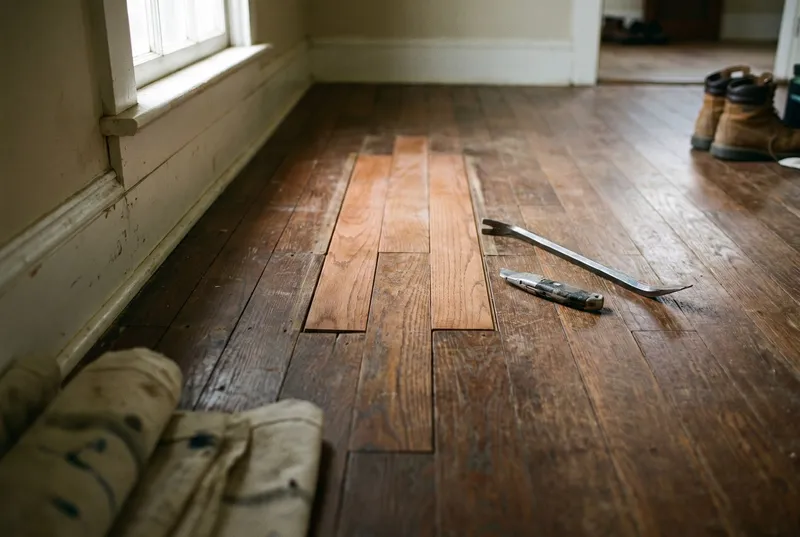
Hardwood floor repair
Water-damaged boards, cupping, gaps, squeaks and pet stains. We replace what has to go and blend the repair into the rest of the floor, then refinish the room so the patch does not show. Water damage that has not cupped past flattening can sometimes be dried and sanded.
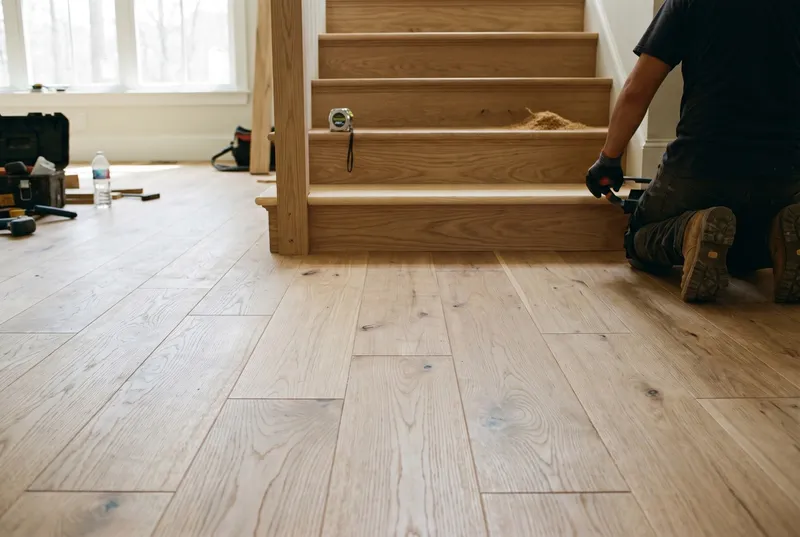
Stair treads, risers and railings
New treads and risers cut to match your floor, or a refinish of what is there. Stairs show wear first, so they are worth doing with the floor. Square or bullnose nosing and matching railings are available.
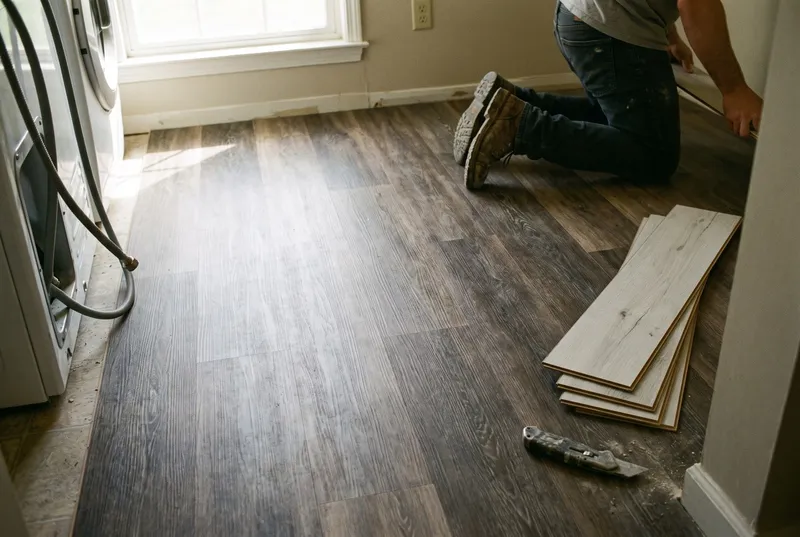
Luxury vinyl plank and laminate installation
When hardwood is not the right call, such as a wet laundry room, we install luxury vinyl plank and laminate over a properly prepared subfloor. Both click together and handle water better than wood. Flat subfloor and a clean transition to the hardwood next door make the difference.
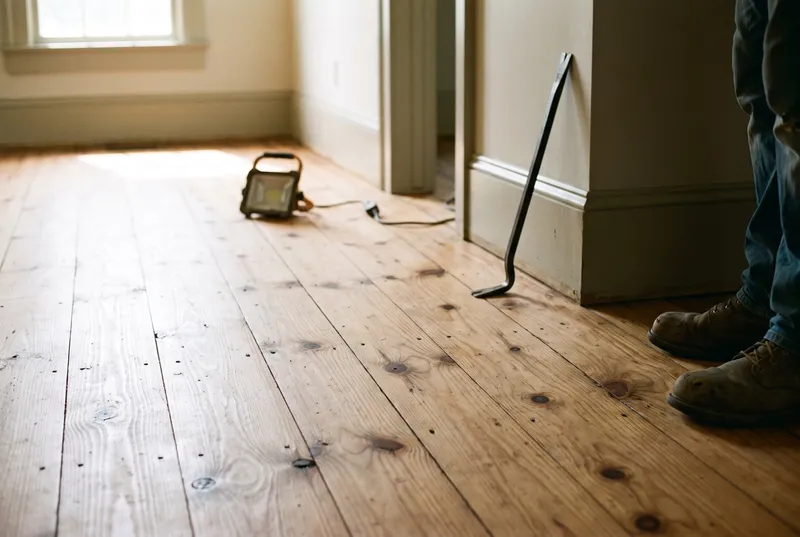
Restoring old pine and farmhouse floors
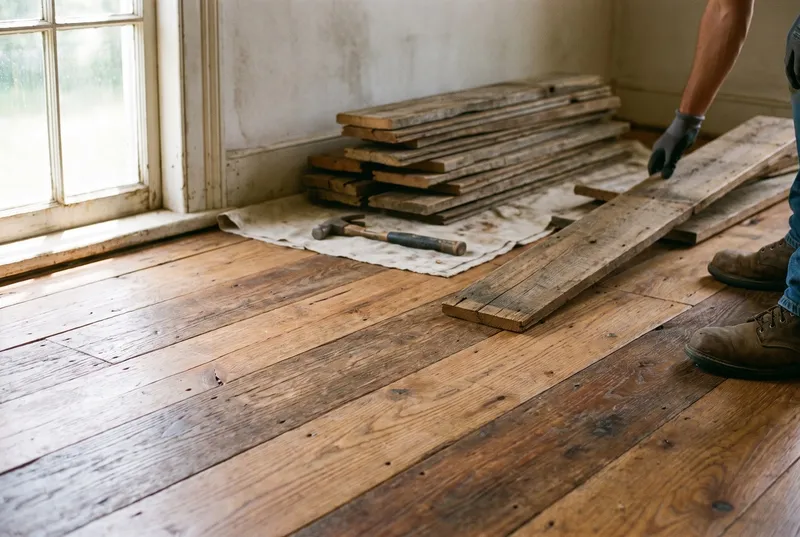
Heart pine and old oak under layers of carpet or vinyl can often come back. We lift, patch and sand carefully, because this wood cannot be replaced. Nail holes, saw marks and colour variation are part of the floor, and a good finish keeps them.